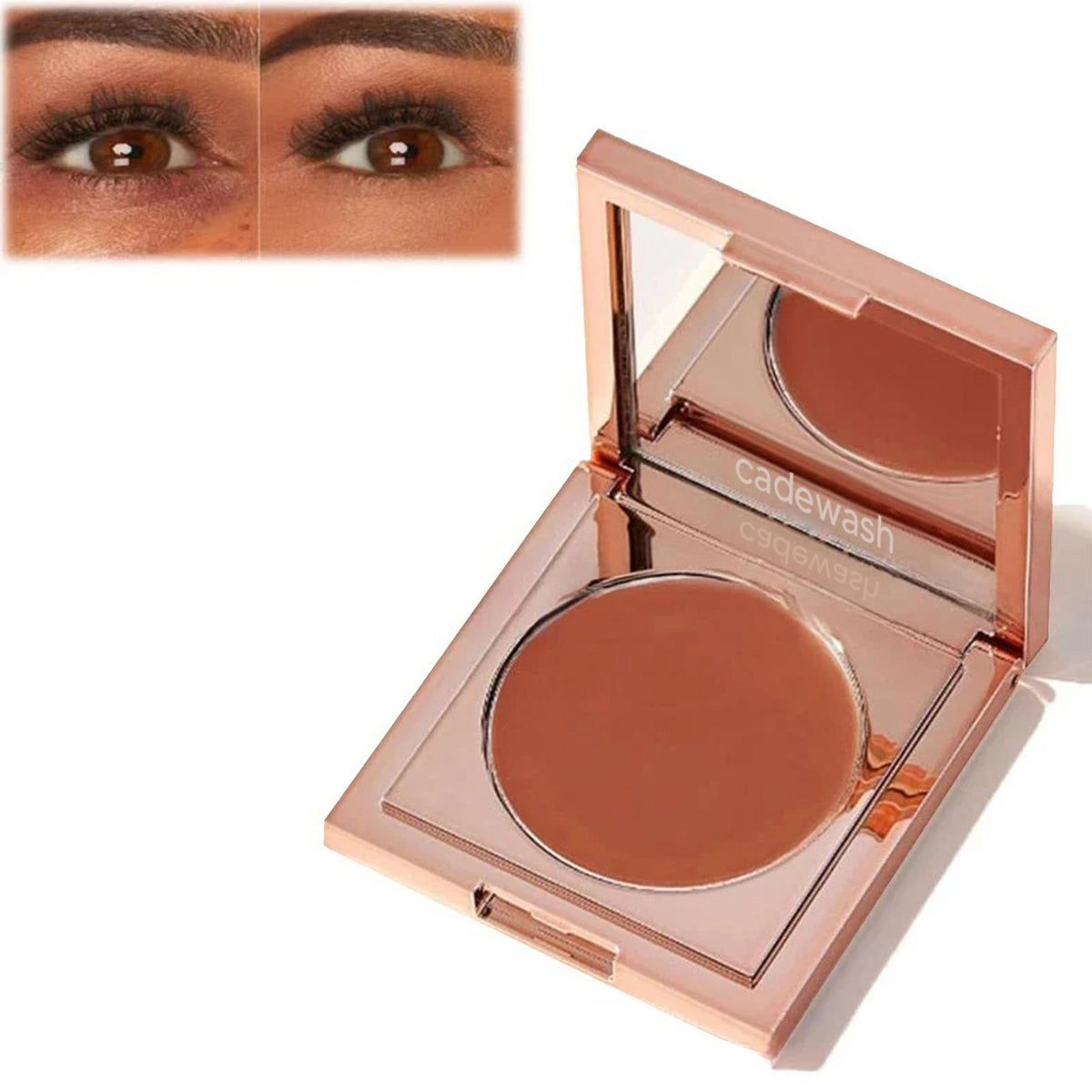
Dark circles can make your eyes look tired—even when you’re feeling
your best. Adding more concealer can leave the under-eye area
looking heavy, especially around fine lines.
Start with a little color correction.
A peach-toned corrector
helps neutralize the look of blue and purple shadows,
creating a more even-looking base for the rest of your makeup.
The routine?
Tap on a thin layer, blend gently,
then add concealer only where you want extra coverage.
A fresh-looking finish starts with less heavy layering.
Over 275,000 empowered women
96%
felt more confident in their bare skin, saying their under-eyes
finally looked bright, smooth, and youthful again.
93%
said they started taking more photos and going out more,
because they no longer felt the need to “hide” tired-looking eyes.
100%
reported feeling attractive again, some even said they felt
comfortable dating, socializing, or showing up makeup-free
for the first time in years.
BASED ON FEEDBACK FROM THOUSANDS OF REAL CUSTOMERS.
The only concealer you actually need
Under-eye corrector feature comparison
Features
Others
Covers dark circles instantly
✓
×
Never settles into fine lines
✓
×
Brightens + smooths in one swipe
✓
×
Lasts all day (no creasing)
✓
×
Replaces 3–5 products
✓
×
Your under-eye routine
Start with a thin layer of corrector, then add your usual concealer where needed.
Explore peach, orange and red application examples.
Swipe to view all 3 →
Peach tones
Light-medium peach · Medium-tan peach
Orange & red tones
Orange · Red
The full look
Before and after makeup application
PRODUCT DETAILS
Specification
Net
2.2g
Shades
#1 Light-Medium Peach#2 Medium-Brown Peach#3 Orange#4 Red
Shelf Life
3 Years
Color & measurement notes
Please allow slight measurement differences due to manual measurement.
Actual product colors may vary slightly depending on monitor settings and lighting conditions.
EVERYDAY ROUTINES. DIFFERENT PERSPECTIVES.
Customer Reviews
Shade choices, application tips and everyday routines.
4.9/ 5★★★★★★★★★★
Based on 46 customer reviews
3★ · 2★ · 1★: 0 reviews
EREmily R.★★★★★
I finally stopped piling on concealer
I used to keep adding concealer whenever my dark circles still showed through, and it always ended up looking heavy.
Using a small amount of peach corrector first makes such a difference. I focus it around the inner corners and deepest shadows, blend it out, and then use way less concealer than before.
LTLauren T.★★★★★
This made my under-eyes look more awake
My under-eyes have a noticeable blue-purple tone, especially in the morning. The peach shade helps balance that out without making the area look too bright.
I only need a tiny amount, and after blending it in, my concealer looks much more natural.
MPMegan P.★★★★★
Peach worked better than a lighter concealer
I always thought I needed a lighter concealer for dark circles, but sometimes that made the area look gray.
Correcting the tone first works much better for me. Now I use this first and then my regular concealer on top.
NCNatalie C.★★★★★
A little really does go a long way
The first time I used it I applied too much. Once I started using just a light layer on the darkest areas, the finish looked so much better.
It keeps my under-eye makeup from feeling overloaded.
BSBrittany S.★★★★★
Exactly what my tired eyes needed
On days when I haven't slept enough, my dark circles are the first thing I notice.
This helps soften the look of that darker shadow before concealer and makes my whole makeup look more refreshed.
JLJessica L.★★★★★
Choosing the right peach tone matters
I like the product, but I definitely recommend paying attention to the shade.
Once I switched to the peach tone that worked better with my skin depth, the correction looked much more natural.
AWAmanda W.★★★★★
Less concealer, better result
I use much less concealer now because the corrector handles the darker undertone first. My under-eye makeup looks lighter and more natural.
RMRachel M.★★★★★
Great for blue-purple circles
My dark circles lean more purple than brown, and the peach tone makes a noticeable difference before concealer.
OHOlivia H.★★★★★
My inner corners look brighter
Most of my darkness is concentrated around the inner corners. I place a tiny amount there and blend outward.
SGSamantha G.★★★★★
Perfect for natural makeup days
I can use this with a small amount of concealer and skip heavy foundation. It gives me the lighter everyday finish I prefer.
DKDanielle K.★★★★★
Much better than layering concealer
I kept putting on more concealer and wondering why the darkness still showed through. Correcting the tone first works better for me.
ABAshley B.★★★★★
Easy to control
I like that I can pick up a tiny amount and slowly build it only where I need more correction.
NANicole A.★★★★★
Makes me look less tired
It makes the darker area under my eyes look more balanced without making my makeup look dramatic.
KDKayla D.★★★★★
Works with the concealer I already own
I didn't have to replace my usual concealer. I simply use the corrector underneath it.
HFHaley F.★★★★★
Nice for thin under-eye makeup
I prefer thin layers around my eyes, and this helps me use less heavy concealer.
MJMorgan J.★★★★★
The peach tone is the key
A regular beige concealer never really balanced the bluish tone for me. Peach underneath it works much better.
EVErin V.★★★★★
Good little makeup bag staple
Small, easy to use and simple to keep with my everyday makeup.
BNBrooke N.★★★★★
Looks more even in photos
My dark circles usually look stronger in pictures. Correcting the undertone first helps my complexion look more balanced.
CRCourtney R.★★★★★
Very quick application
It adds maybe one extra minute to my routine because I only use it where the darkness is strongest.
VEVanessa E.★★★★★
I finally understand color correcting
Once I understood that peach corrector addresses the darker undertone first, the technique made much more sense.
TCTiffany C.★★★★★
Works best with a light hand
Less is definitely more for me. A thin layer looks much better than applying too much product.
ATAmber T.★★★★★
Shade selection matters
Choosing the correct depth of peach or orange is important. Once I found the better shade, the result improved.
JSJenna S.★★★★★
Good under my everyday base
It works nicely underneath my usual concealer and helps keep the eye area from looking gray.
PLPaige L.★★★★★
Helpful on rough mornings
This is what I use when I've had little sleep and the shadows underneath my eyes look especially dark.
KYKristin Y.★★★★★
Targeted instead of heavy coverage
I like correcting just the deepest shadows instead of putting a thick layer of makeup everywhere.
CPChloe P.★★★★★
Makes my makeup look cleaner
My final makeup looks less layered because I don't need nearly as much concealer.
AHAllison H.★★★★★
Took a couple tries
There was a small learning curve with the amount, but once I figured it out, the finish looked much more natural.
SWSydney W.★★★★★
Great before concealer
I treat this as the correcting step and use concealer afterward only where I still need extra coverage.
MGMolly G.★★★★★
Simple but useful
It solves one specific problem in my routine, which is exactly why I keep reaching for it.
KOKaitlyn O.★★★★★
Good for the inner corners
Most of my darkness is closest to the inner corner, so I focus the product there.
LMLeah M.★★★★★
Peach makes more sense than going lighter
I used to choose a lighter concealer. Correcting the darker undertone first gives me a better-looking base.
HBHannah B.★★★★★
The finish looks more natural
A thin layer underneath concealer looks much less makeup-heavy on me.
TATaylor A.★★★★★
Easy to add to my routine
It is only one extra step and fits easily into the makeup routine I already have.
MIMadison I.★★★★★
Helpful before long days
I like starting with a more balanced under-eye tone before applying the rest of my makeup.
FNFaith N.★★★★★
Good if concealer still looks gray
This helps warm up the under-eye area before I apply my regular concealer.
AUAlyssa U.★★★★★
I use less product overall
Since adding a correcting step, I use much less concealer than I did before.
GZGabrielle Z.★★★★★
Useful on no-foundation days
Sometimes I use this with just a small amount of concealer and skip foundation completely.
MCMia C.★★★★★
The shade makes all the difference
The effect became much better once I found the peach depth that matched what I needed to correct.
SDSavannah D.★★★★★
Good for targeted brightening
I focus on the darker inner part of my under-eye instead of applying product everywhere.
CXCaroline X.★★★★★
Makes my concealer work better
The corrector gives my usual concealer a better-looking base underneath.
KRKennedy R.★★★★★
Nice on low-makeup days
A little corrector and concealer is sometimes all I need for my everyday makeup.
BJBailey J.★★★★★
Helpful for uneven under-eye color
My discoloration is darker in some areas, so I like being able to place the product only where I need it.
AQAriana Q.★★★★★
Makes me look more rested
My under-eyes look less shadowy and my overall complexion looks more balanced.
LVLily V.★★★★★
Easy once I stopped overapplying
The biggest improvement came from using much less product. Thin layers work better for me.
JKJasmine K.★★★★★
Good everyday option
It solves the same under-eye issue for me without adding much time to my morning routine.
ASAutumn S.★★★★★
Works well with a small brush
Using a small brush helps me place the product precisely where the darker areas are.
No matching reviews. Try a different filter.
UNDEREYE CORRECTOR 101
Frequently Asked Questions
Everything you need to know about choosing
your shade, applying your corrector, and
achieving a beautifully balanced look.
What does an under-eye color corrector do?
Our Colored Clay CC Under-Eye Corrector
helps neutralize the appearance
of dark circles and uneven undertones,
including blue, purple, and gray-looking
discoloration.
By balancing these tones before applying
concealer, you can create a more even-looking
base without relying on heavy layers
of makeup.
Which shade should I choose?
Choose a shade based on your skin tone
and the depth of your under-eye
discoloration.
#1 Light-Medium Peach
Ideal as a starting point for light
to light-medium complexions with
mild to moderate dark circles.
#2 Medium-Tan Peach
A warmer, deeper peach shade for
medium to tan complexions.
#3 Orange
Designed for deeper-looking
discoloration, especially on
tan to deeper skin tones.
#4 Red
A rich correcting shade for
very deep complexions and
pronounced dark-looking areas.
Tip:
Start with a small amount. The right
shade should help balance visible
discoloration without creating an
overly warm-looking finish.
Should I apply it before or after concealer?
Apply your color corrector
before concealer.
Start with your usual skincare routine.
Gently apply a thin layer of corrector
to the darker areas under your eyes
and blend the edges.
Follow with your favorite concealer
for your desired level of coverage.
This helps create a more natural,
even-looking finish.
How much product should I use?
A little goes a long way.
Start with a tiny amount and gently
blend it over the areas where
discoloration is most visible.
Build coverage gradually if needed.
Applying thin layers helps prevent
excess buildup and keeps your
under-eye makeup looking natural.
Where exactly should I apply the corrector?
Focus on the
darkest-looking areas
beneath your eyes rather than covering
the entire under-eye area.
This often includes the inner corners,
tear troughs, or areas where blue,
purple, or gray shadows appear.
Blend outward gently for a smooth,
seamless transition.
Will the peach or orange shade show through my makeup?
When you choose a suitable shade and
apply a thin layer, the corrector
is designed to work
underneath your concealer
rather than remain visible as the
final makeup color.
If the peach or orange tone looks
too noticeable, try using less
product or choosing a lighter
correcting shade.
Can I use it with my regular foundation and concealer?
Absolutely!
Color corrector is an additional step
that can complement your existing
makeup routine.
Apply your corrector to the areas
that need color balancing, then
continue with your usual concealer,
foundation, and setting products.
You may find that less concealer
is needed once the appearance of
dark undertones has been balanced.
What's included in each bundle?
Choose from three bundle options
available on this product page:
BUY 1 GET 1 FREE2 pieces total
BUY 2 GET 2 FREE4 pieces total
BUY 3 GET 3 FREE6 pieces total
Simply select your preferred shade
and bundle option before adding
the product to your cart.
What if my shade looks too orange or too light?
First, try applying a smaller amount
and blending it thoroughly.
If the result still looks too warm,
consider a lighter peach shade.
If the corrector appears too light
or does not sufficiently balance
deeper-looking discoloration,
a deeper peach, orange, or red
shade may work better.
Remember:
Color corrector works best when
applied in thin, targeted layers
underneath your concealer.
Choosing a selection results in a full page refresh.